The challenge
The brief began with collaboration and communication between departments, particularly between the travel consultants who design trips and the operations teams who deliver them. As we got to know the organisation through our planning conversations, the framing grew: how could the company work together as one system?
The objective for the day was "To improve cross-team coordination and execution by aligning on future ways of working and behaviours." The whole company would be in the room, in a mix of languages and from every level.
What we did
We prepared with the senior leadership team first, then designed a day that moved from experience to insight to commitment.
- Dialogue, not discussion. We opened with a few working assumptions: think together, inquire before you advocate, assume positive intent.
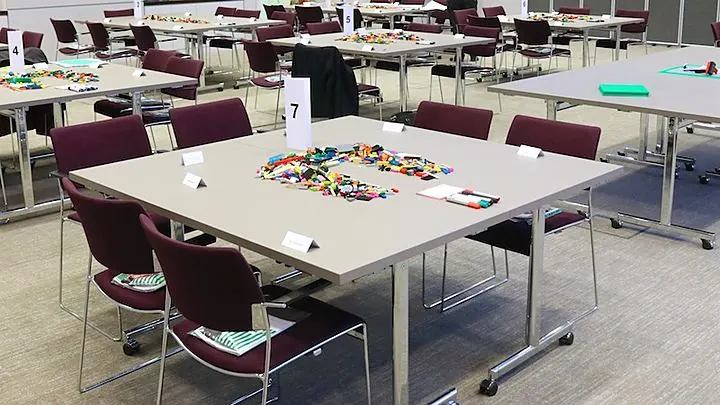
- A tower that tested the system. Each table built a LEGO tower to a specification, with secret role cards and a reward rule. The exercise showed how quickly incentives and hidden agendas shape behaviour, and set up a simple idea: a system produces exactly the behaviour it is designed to produce.
- Building what makes collaboration hard. After learning the LEGO® Serious Play® method, everyone built a model of the behaviours that make collaboration difficult on a normal day, then named the unwritten rule underneath.
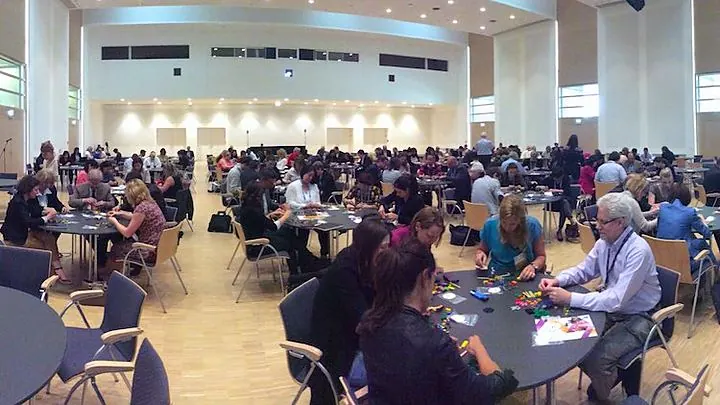
- Bridges between every table. All 23 tables then had to connect to each other with a network of LEGO bridges, so that a tiny figure could travel to every table in the room. Around 180 people built the network in a short window, with real energy in the room.
- Individual and shared visions of the company working as a collaborative system, built and told table by table.
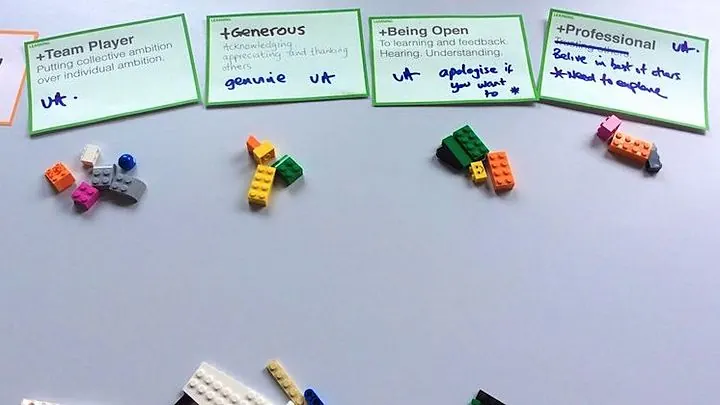
- Positive behaviours and ways of working. In the afternoon, each person built the behaviour they believed should sit at the heart of that vision. Tables voted with bricks, then designed and stress-tested the ways of working that would encourage those behaviours.
- Leadership reflections in dialogue with the room, then personal commitments: what will you do differently, starting now?
Live polling ran throughout, so everyone could contribute anonymously, in English or Japanese, and leaders could see the room's view in real time.
What the room chose
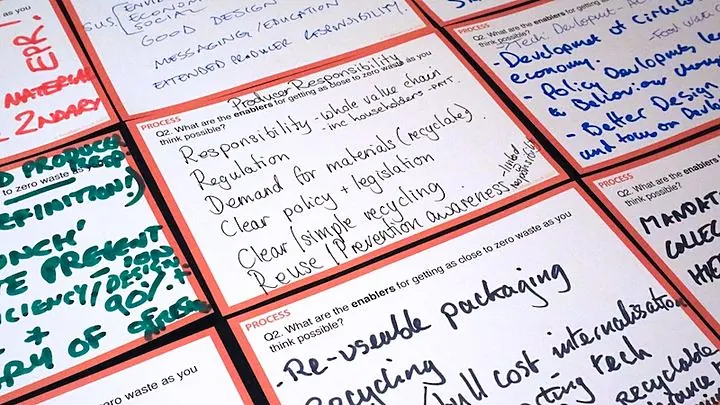
The most useful finding was the one the room reached independently, twice. Communication was named as both the main obstacle to collaboration and the main enabler of it: in the physical models built at the tables, and separately in the anonymous poll answers, with neither group seeing the other's work.
From the models and the votes came two key behaviours and two ways of working:
- Trust: the behaviour named most often across the tables, including in the leadership team's own model.
- Teamwork and communication: narrowed to something a manager can see and recognise, closing the loop every time.
- Shadowing between departments, starting with short, informal rotations between travel consultants and operations.
- An anonymous upward feedback channel, with leadership committed to responding visibly each month.
After the day
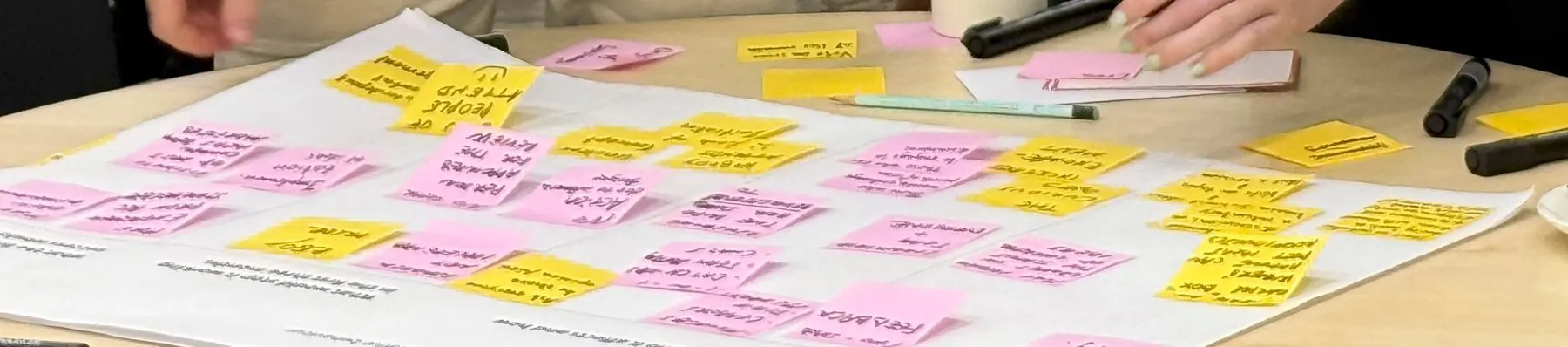
We wrote up quick wins for the leadership team: a 60 to 90 day pilot of all four, using photographs of the participants' own LEGO models and their own words as low-cost recognition, rather than a new poster campaign. We were also candid that a single day works on behaviours, not on the structures that produce them, and suggested a conversation about longer, systems-level work.
What participants said
"Talk to people I haven't talked to before."
"We're all facing the same issues."
"Make a dialogue and not a discussion."
Anonymous answers to "What was the most valuable thing you learned?"
Results
- A network of bridges built across all 23 tables in one short challenge
- Communication named, independently, as the main obstacle and the main enabler
- Two key behaviours and two ways of working, chosen by the room
- More than 600 anonymous written contributions during the day
- A 60 to 90 day pilot plan for leadership