A new board meeting for the first time

Board away day facilitationBoard away days where the board and executive think together

Strategy sessions for boards, trustees, governors and executives, designed with the chair and facilitated with an understanding of how boards work. Across Asia and Europe.

Board sessions we facilitate

Boards bring us in when the stakes are high, time is short and the relationship between board and executive matters as much as the agenda.

  • Board and executive strategy daysAmbition, direction and the strategic choices ahead, worked on together.
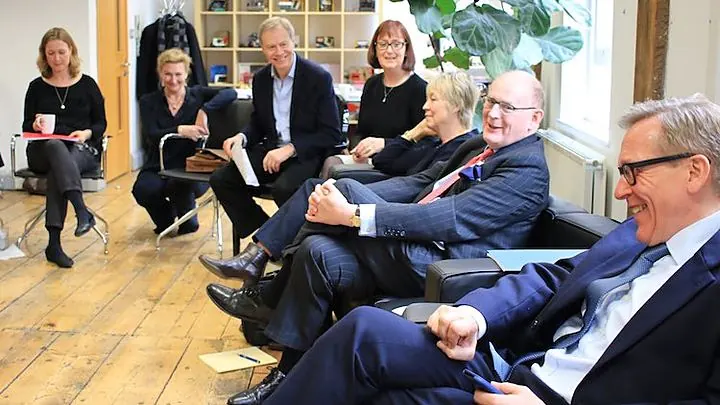
  • Onboarding a new boardTurning people who have never met into a cohesive board within hours.
  • Trustee and governor away daysFor charities, universities, colleges and member associations.
  • Advisory board inductionBringing new advisers up to speed through real strategic work.
  • Scenario and risk sessionsExploring futures and testing strategy before committing to it.
  • Board effectiveness conversationsHow the board works together, and how it works with the executive.

Working with the chair

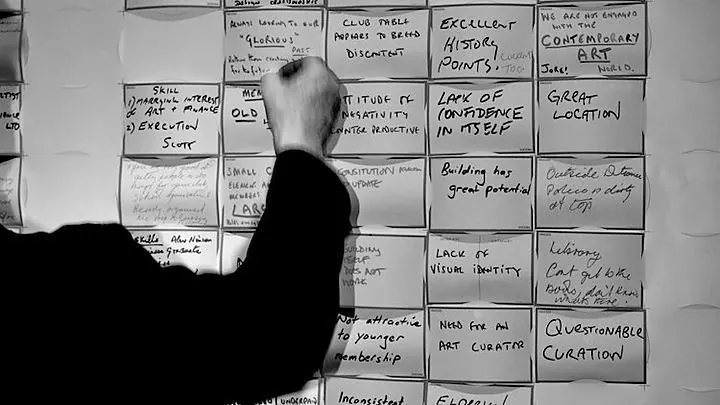
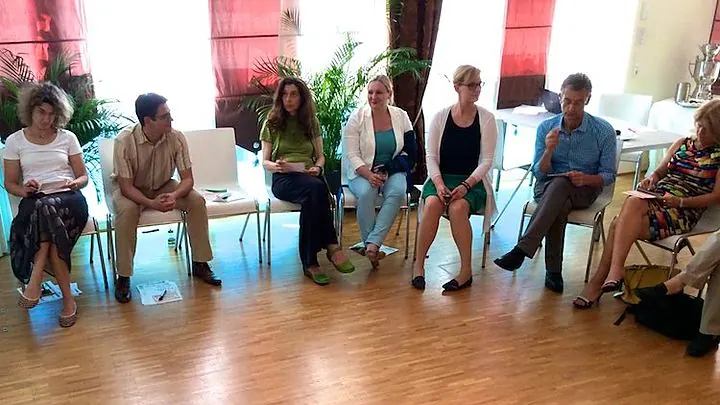
We design board sessions with the chair, and usually the chief executive, so that both can take part fully on the day. Our role is to own the process: clear objectives, time for every voice, open discussion of difference, and real agreement before decisions are recorded.

Sean Blair has served on five boards: the Business Link accreditation advisory board, the Mayor of London's Creative Industries Commission, the RSA council and trustees, and the council of the Design Council. He understands the culture of boards and works with chairs creatively and sensitively while keeping attention on strategic priorities.
What makes board work different

  • Seniority and status. Board members are used to being listened to. The process has to give everyone equal airtime without anyone feeling managed.
  • Different roles. Non-executives and executives see the organisation differently. Good sessions make those differences useful.
  • Real agreement. Silence in a boardroom is not consent. We test decisions openly, for example with Scales of Agreement.
  • Limited time. Boards rarely meet for long, so every minute is designed.

Case studies

Relevant examples

ESCMID: A board and executive office agree the future of a congress

ESCMID

A board and executive office agree the future of a congress

10 people1 day

Led by Sean Blair

Europe's leading society in clinical microbiology brought its executive board and executive office together, for the first time in this way, to shape the future of an 11,000-person annual congress.

Read the case study →
The Arts Club London: Onboarding a new board in five hours

The Arts Club London

Onboarding a new board in five hours

10 people5 hours

Led by Sean Blair

A new chairman invited a new board, many of whom had never met, to take a fresh look at vision and strategy.

Read the case study →
William Grosvenor and Partners: Inducting a new advisory board through strategy

William Grosvenor and Partners

Inducting a new advisory board through strategy

3 to 12 people2 days

Led by Sean Blair

Executives built vision, strategy and proposition on day one, with a strategic illustration. On day two the new advisory board joined, reviewed the thinking and was inducted into the business.

Read the case study →
Ravensbourne: From healthy scepticism to shared ambition

RavensbourneLSP

From healthy scepticism to shared ambition

28 people1.5 days

Led by Sean Blair

Trustees and senior executives of a London university college built a shared identity model, mapped the forces acting on it, played real-time strategy and agreed simple guiding principles.

Read the full story →
Fight for Sight: Understanding the choices we face

Fight for Sight

Understanding the choices we face

18 peopleTwo workshops, 3 and 6 hours

Led by Sean Blair

The UK's leading eye research charity sought real agreement between trustees and executives on ambition, direction and the strategic choices ahead.

Read the case study →
RIPE NCC: Real-time strategy in a changing landscape

RIPE NCCLSP

Real-time strategy in a changing landscape

6 people3 days, then a board meeting

Led by Sean Blair

One of five Regional Internet Registries explored ambition, direction and future scenarios with its executive team, then took the thinking into a board meeting that agreed strategic priorities.

Read the case study →

All case studies →

Questions

Common questions

Short, direct answers about how we work.

Should the chair facilitate the board away day?

Usually not. The chair's role in the conversation is important, and a neutral facilitator lets the chair take part fully while keeping the process fair.

How do you handle disagreement between board and executive?

By designing for it. We make differences visible early, explore the reasons behind them, and use structured methods to reach real agreement, or to record clearly where agreement does not yet exist.

Do you work with charity trustees and university governors?

Yes. Clients include Fight for Sight, Ravensbourne and many other charities, colleges and member associations.

Can board members join online?

Yes. We design hybrid sessions so that people joining remotely can contribute as fully as those in the room.

You don't want a meeting. You want an outcome.

Tell us what you need to achieve. We will help you design the time together to get there, and reply within two working days.