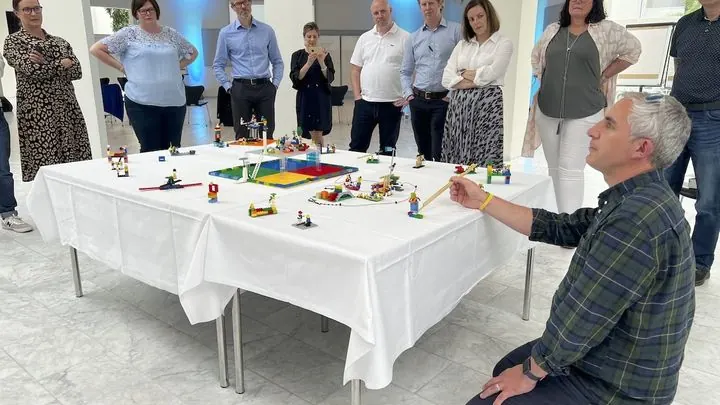
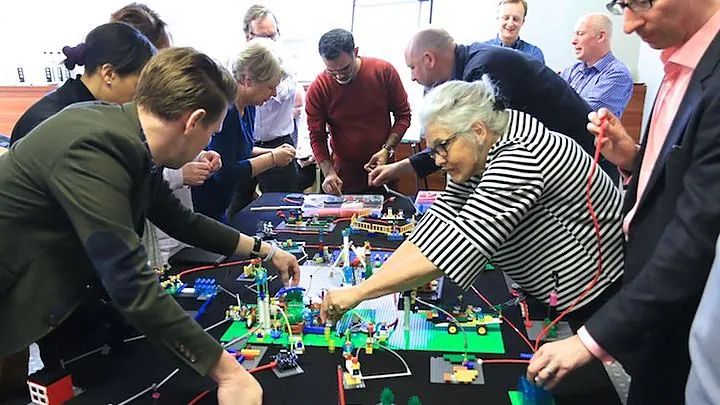
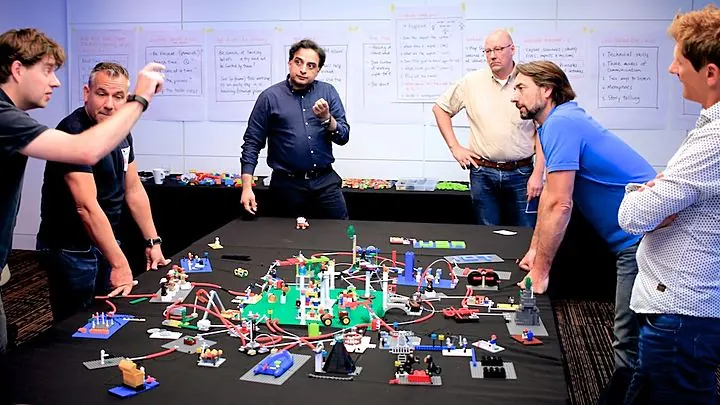
An executive team playing real-time strategy on a shared model

Strategy away day facilitationStrategy away days that end with a plan people own

A day or two away from the business to agree ambition, make the hard choices and commit to what happens next. We design and facilitate strategy away days for leadership teams in the UK and Europe, Singapore and across Asia.

What you leave with

A good strategy away day is judged by what happens the following Monday. We design backwards from that.

  • A shared view of the contextWhat is changing around you, seen from every seat at the table.
  • Agreed ambition and directionWhere you are going, in words and pictures people remember.
  • The few choices that matterOptions tested openly, with real agreement rather than silence.
  • A plan with owners and datesWho does what, by when, captured before anyone leaves.
  • Commitment, not just complianceEveryone has shaped the outcome, so everyone owns it.
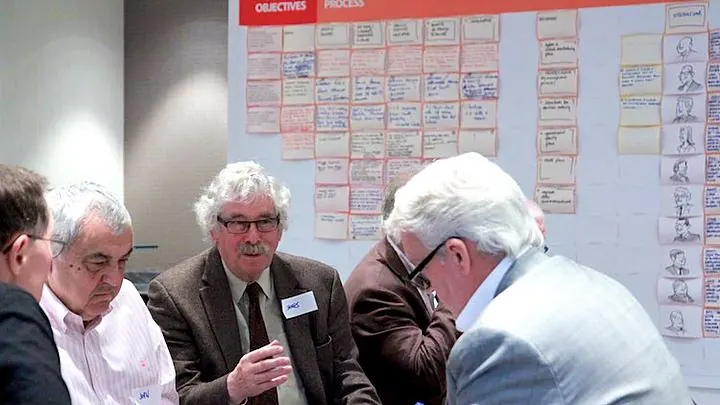
  • A record of the thinkingGridcards, models and photographs shared within days.

A typical shape for the day

Every design is different, because every team and every strategic question is different. But many of our strategy away days follow a shape like this:

  1. Before: conversations with the sponsor and key participants, then objectives that start with active verbs, and a process designed for your group and the time available.
  2. Context and reality: what has changed, what the data says and how people feel about it, using a focused conversation.
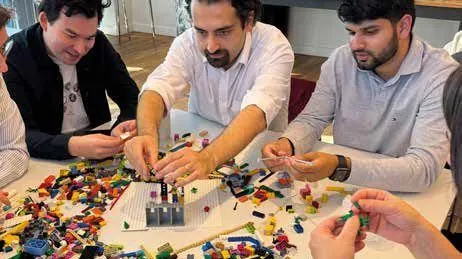
  3. Ambition: a shared picture of the future, often built with LEGO® Serious Play® or captured as a strategic illustration.
  4. Choices: the options in front of you, debated openly and tested with Scales of Agreement.
  5. Plan and commitments: priorities, owners, dates and the first steps.
  6. After: the record, the actions and a recommended next step, shared within days.

Why bring in a facilitator?

When the chief executive or managing director runs the away day, they cannot also take part in it. A facilitator owns the process so the leader can contribute, hears every voice including the dissenting ones, keeps attention on the outcome, and is free of the history and politics in the room. Preparation usually takes longer than the day itself, and that is where most of the value is created.

Case studies

Relevant examples

Oxera: One agreed vision, built by the whole practice

OxeraLSP

One agreed vision, built by the whole practice

24 peopleDesign, facilitation and follow-up2024

Led by Sean Blair

Oxera's Data Science Practice, from junior staff to board level, built a shared vision of its contribution to the wider group and mapped the forces that could pull it off course.

Read the case study →
The Insights Group: 400 voices shaped the strategy

The Insights GroupLSP

400 voices shaped the strategy

400 people14 workshops over 3 months2022

Led by Sean Blair

Before setting strategy, The Insights Group asked every member of staff what its purpose meant to them: 14 workshops in Singapore, Dundee, Amsterdam, Berlin, the USA and online, then a synthesis day in Billund for 30 leaders.

Read the case study →
RIPE NCC: Real-time strategy in a changing landscape

RIPE NCCLSP

Real-time strategy in a changing landscape

6 people3 days, then a board meeting

Led by Sean Blair

One of five Regional Internet Registries explored ambition, direction and future scenarios with its executive team, then took the thinking into a board meeting that agreed strategic priorities.

Read the case study →
Ravensbourne: From healthy scepticism to shared ambition

RavensbourneLSP

From healthy scepticism to shared ambition

28 people1.5 days

Led by Sean Blair

Trustees and senior executives of a London university college built a shared identity model, mapped the forces acting on it, played real-time strategy and agreed simple guiding principles.

Read the full story →
Fight for Sight: Understanding the choices we face

Fight for Sight

Understanding the choices we face

18 peopleTwo workshops, 3 and 6 hours

Led by Sean Blair

The UK's leading eye research charity sought real agreement between trustees and executives on ambition, direction and the strategic choices ahead.

Read the case study →
William Grosvenor and Partners: Inducting a new advisory board through strategy

William Grosvenor and Partners

Inducting a new advisory board through strategy

3 to 12 people2 days

Led by Sean Blair

Executives built vision, strategy and proposition on day one, with a strategic illustration. On day two the new advisory board joined, reviewed the thinking and was inducted into the business.

Read the case study →

All case studies →   Strategy workshops and leadership offsites in Singapore →

Questions

Common questions

Short, direct answers about how we work.

How long should a strategy away day be?

Usually one or two days. A focused vision and priorities day can work in one; a team that needs to rebuild trust as well as agree strategy often benefits from two, ideally with an evening in between. Some organisations run a series of shorter workshops instead, so more people can take part.

How many people should attend?

For a leadership team, between six and twenty is typical. We can involve far more people through a staged process: the leadership team first, then wider workshops, as University of the Arts London did with all 120 staff.

Should our chief executive facilitate?

We would advise against it. The leader's view matters, and it is hard to contribute fully while also running the process. Leaders tell us they value taking part as a participant.

Where should we hold it?

Somewhere with daylight, space to move and walls you can use. We can advise on venues in London, Singapore and elsewhere, and work in your own offices if they suit.

Can you run a strategy away day online?

Yes, though we usually recommend in person for the most important conversations. Online, we split the work into shorter sessions over several days. See online and hybrid facilitation.
You don't want a meeting. You want an outcome.

Tell us what you need to achieve. We will help you design the time together to get there, and reply within two working days.